


BALSAS ONDA VERDE
A legacy of faith, selection, and innovation in Brazilian cattle ranching
We are a family with the DNA of cattlemen.
My grandfather, my great-grandfather, my father — all were drovers. They drove cattle from the Northeast of Brazil, entering through Goiás and crossing the entire Central-West region, often finishing their journeys in other South American countries. During these long trips, they also made selections — not only on the farms, but along the way. They observed the cattle’s stride, endurance, and ability to reach their destination. They were men who slept under trees, with no roads, climbing hills, facing rain and sun — yet always reaching their final destination. People of deep faith. Born selectors, they could judge even by the animal’s gait. Those that started too fast rarely finished the journey. The ones that kept a slower, steady pace were the ones that reached the watering hole and drank the clean water. The first to reach the green grass and clean water gained the strength of nutrition — and they observed that closely. They noticed that animals with a measured rhythm had greater endurance, and even if they arrived thin, once they found good pasture, they recovered quickly and gained weight impressively. It was, in practice, a process of natural selection. Those that did not endure were left behind. The cattle drive was also a school — of observation, patience, and metrics. Following the cattle to the slaughterhouse was part of the job. They compared, evaluated, and learned. Our cattle always stood out among other lots, earning praise and recognition — and so it continues to this day.
The Guardians of the Land, the Genetics, and the Family Values:
The Four Generations of the Guimarães Family.
1. Salviano, Dãozinho, and Nelinho Guimarães — the first three generations of a legacy in Brazilian cattle ranching.
Our family’s history in cattle began in 1903, when my great-grandfather, Salviano Monteiro Guimarães, made a decision that would change not only our destiny but also point to a new path for animal selection in Brazil. It was he who began, in the Cerrado of Goiás, the breeding and selection of a polled, white, functional herd — genetics that were born before they even had a name, but that years later would give rise to the Tabapuã breed*.
From the outset, functionality and packing plant conformation were priorities. Salviano believed in the importance of an animal that produced efficiently and delivered results. In 1929, he was already reaping the rewards of that ideal: during the 1st Agricultural Fair of Goiás, he presented to the public a selection of entirely polled cattle — something unprecedented at the time, which drew attention not only for rusticity and uniformity, but also for the press coverage that consecrated that historic moment. That was the birth of the Mocho Nacional and later the bull Japão, the zootechnical foundation of our herd and a precursor of the Tabapuã breed in Goiás.
My grandfather, Sebastião (“Dãozinho”), and later my father, Emanuel (“Nelinho”), followed that same path with determination. And even when measurement technologies did not yet exist, they already applied an intuitive and effective selection, based on the observation and good sense of those who know cattle in the field — by feel and by eye. They were cattlemen. They drove herds in droves of up to two thousand animals, leaving the Bahia–Tocantins border toward the Central-West and the Southeast.
My father, Nelinho, took it a step further. He devoted himself to metrics and data. He wanted to prove what intuition already knew. In one of his initiatives, he monitored the slaughter of 600 animals of different breeds under the same conditions. The result was decisive: the polled cattle showed, on average, more than one arroba more than the others. In less than a week, he got rid of all the other breeds and began investing exclusively in our polled herd — now with more focus, more criteria, and even more passion. He was a born selector and, with mastery, built a herd with a consecrated genetics, awarded countless times in the country’s main show rings.
*Excerpts from the official book of the Tabapuã breed (ABCT/ABCZ)
2. And so we arrive at the fourth generation…
Our roots run deep. We are a family of cattlemen — drovers and men of faith — who learned to select cattle by sight and by work, valuing rusticity, functionality, and performance. Over generations, we have built a prize-winning herd, respected throughout Brazil.
With my father’s passing, my dear husband Istênio and I decided to investigate more precisely what our animals carried within. Carcass ultrasonography revealed that 16% of the animals already showed marbling — in addition to excellent AOL/REA (área de olho de lombo / ribeye area) and EGS/backfat thickness. A genetic heritage begun, without our knowing it, decades ago.
From there, we selected high-performance donor cows and began a genetic multiplication program. Today, at Fazenda Balsas Onda Verde, we unite tradition and technology: we invest in data, metrics, and directed matings to produce beef of excellence.
We already have 45–50% of our herd with a high degree of marbling, excellent fat cover, and great carcass yield. In the near future, our goal is to deliver to the market a complete genetics portfolio: bulls, females, semen, embryos, and calves aimed at meat quality.
The beef the world desires is already born here on our pastures: tender, flavorful, succulent.
Yes — a marbled Zebu. The future has arrived — and it is irreversible.
Where does this calling, this strength, come from? I am certain it comes from far away. From above. From those who came before us, in a cycle that unites Earth and Heaven. And it is by faith, with eyes on the future and feet firmly on the ground, that we go on.
Always forward. So that we can pass the baton on.
Videos


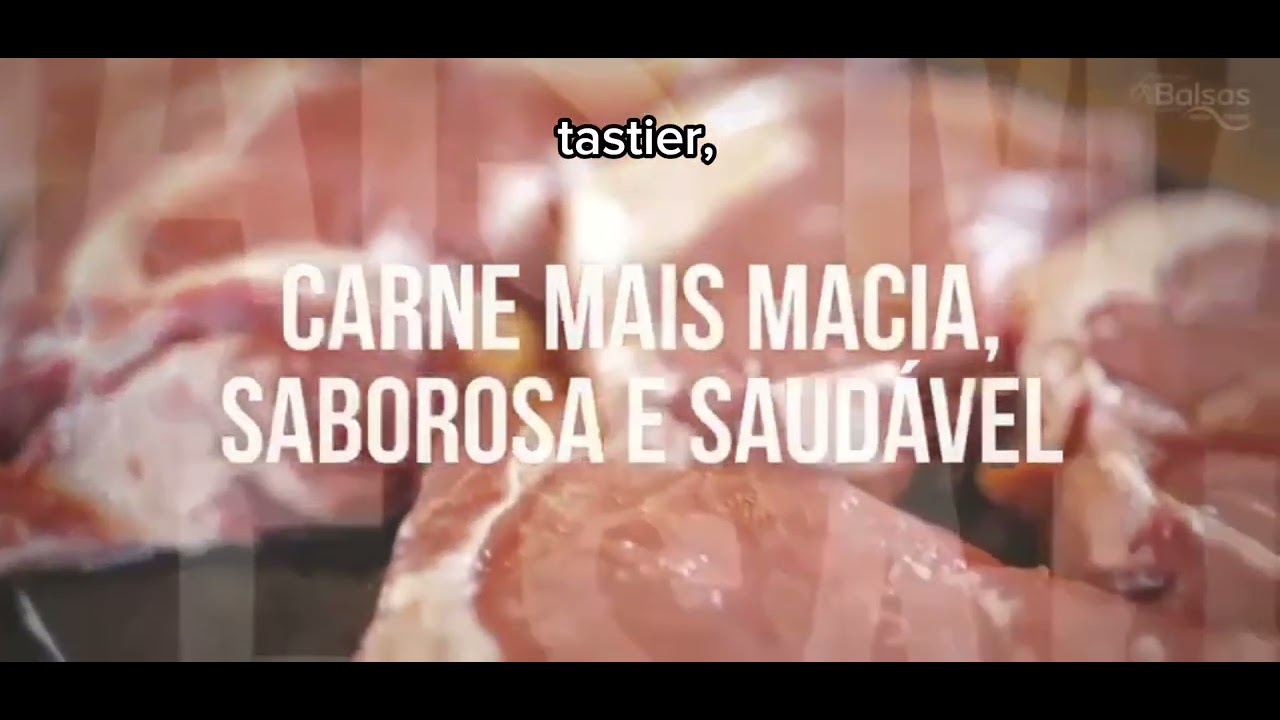


From the scale to the breeder
The ultimate goal has always been the same: the scale, money in the pocket, and the sustainability of cattle ranching.
Up to my grandfather’s generation, the focus was weight.
With my father came a new perspective — the refinement of selection within the Tabapuã breed and the pursuit of results for the breeder as well.
What did the breeder need?
A hardy animal, raised on pasture, that needed no “instruction manual” — one that arrived and performed its role: high libido, precocity, excellent maternal ability, long-lived and productive females, strong hybrid vigor, docile temperament, and easy handling — which is also essential for worker safety.
That is the type of animal we offered, keeping the same DNA of observation and efficiency at the scale.
My father always said:
“My daughter, a new customer is great, but a returning customer is much better.”
And thank God, our customers always return — and we honor them.
Trust that spans generations
Since that time, our relationship with slaughterhouses and breeders has always been solid and based on trust.
Most importantly, it spans generations.
Regarding slaughterhouses, they always knew what they were getting and passed on a high-quality product — with more weight, more meat, and better yield.
Without realizing it, we were already delivering premium beef, and they always paid a bonus for it.
Even today, many slaughterhouses don’t ask for videos of the cattle:
“No need. We have a slot for that day and will pay X.”
This trust, built over decades, is something we want to preserve and honor.
The legacy continues
With my father’s passing, I felt a deep calling to continue this legacy of three generations.
Now, in the fourth generation, together with my husband and our children, we decided to create something bigger — a plural and innovative project within Brazilian cattle ranching.
We invested in genetics and identified exceptional animals — with spectacular carcasses, early maturity, fertility, and now, a special focus on marbling.
As soon as we receive our animals, we perform carcass ultrasound inventory to understand what they carry inside.
We discovered that 16% of the herd was naturally marbled.
We selected donor females with excellent ribeye area, fat cover, and marbling scores, multiplying them through embryo transfer and other reproductive technologies.
After all, the cost of multiplying a good or a bad animal is the same — the difference is knowing which one to multiply.
We want Brazil to stop multiplying commodity beef and start producing beef of excellence — flavorful, healthy, and high-value.
Our dream is for every Brazilian — and the world — to enjoy high-quality, pasture-raised beef, produced sustainably, with pleasure and pride.
We focus on genetics with outstanding phenotypic traits, without losing pasture hardiness — with origin, transparency, and technology aimed at delivering tender, flavorful, marbled beef to the final consumer.
Cattle ranching has always been technological — with IATF, embryo transfer, genomic selection — and we keep absorbing all of it, with our feet firmly planted in the roots of the past.
Honoring the legacy
We do all this to honor our ancestors.
They did everything — without tractors, without cell phones, crossing rivers on rafts, sleeping under trees, traveling in cattle drives.
They left us more than a farm — they left a legacy of excellence.
It is an honor to continue this story, but also a great responsibility.
We must never forget the past.
Faith, love, and purpose
This is work done from sunrise to sunset, with dedication and love — because without love, none of this endures.
Raising Tabapuã fills us with pride.
And, in the end, comes the question:
Where does this strength come from?
It comes from above — from my father, my grandfather, my great-grandfather, and my brother.
It comes from God and all our intercessors.
With faith, longing, and gratitude, we continue honoring and preserving nature — observing the land, the winds, the waters, and the animals.
It’s a beautiful cycle, connecting earth and sky.
The earth gives everything, but the heavens command.
Our faith is immense.
And it is with that faith that we continue this journey.

Email: fazendabalsas.ondaverde@gmail.com | Instagram: @fazendabalsas.ondaverde | Telefone/Whatsapp: (61) 99979-9191